यह लेख अभी हिन्दी में उपलब्ध नहीं है, इसलिए इसे अंग्रेज़ी में दिखाया जा रहा है।
DDR6 RAM Explained: Faster, Half the Size, and Built for AI Data Centers
JEDEC previewed DDR6: 12.8 GT/s and up, 74 mm modules, wider bus, more capacity. What changes from DDR5, who it's for, and when you might get it.
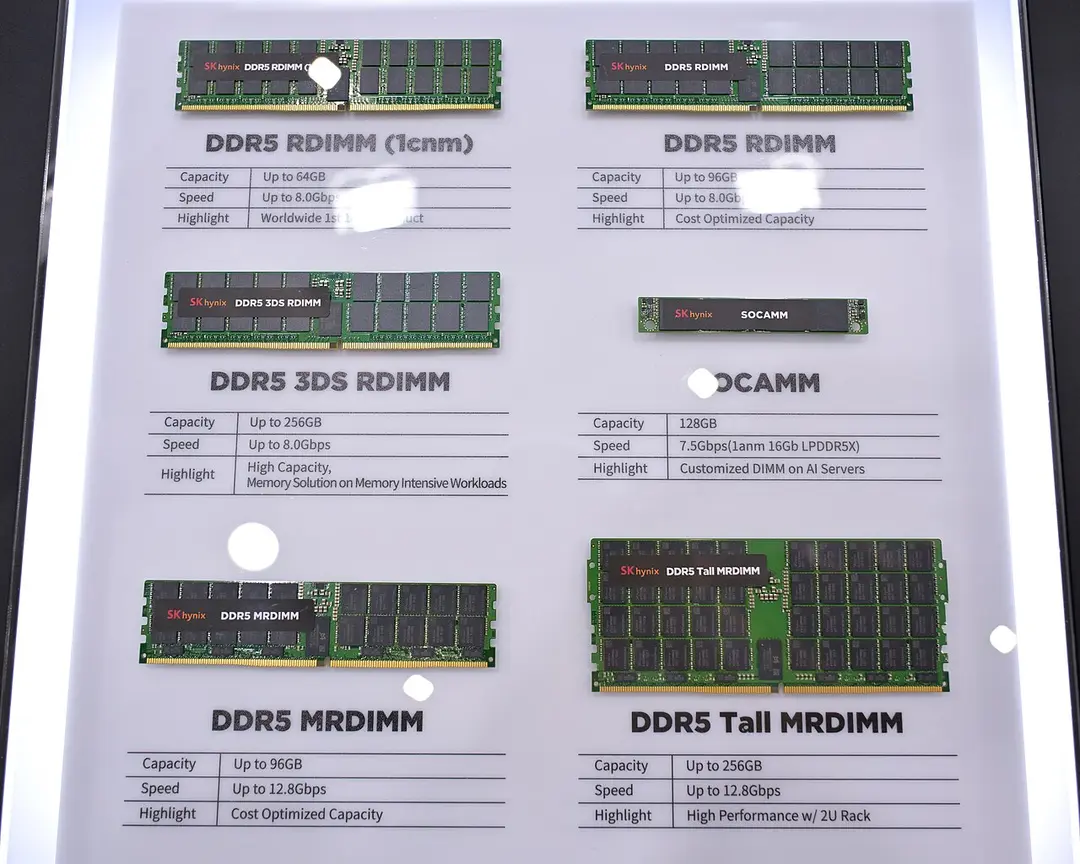
Memory is hard to buy right now, but the next generation is already taking shape. JEDEC, the group that sets the standards for computer memory, has published a first preview of DDR6. It's faster than DDR5, the modules are almost half the size, and it's designed first for AI data centers. Here's what we know.
The preview was reported by PC Gamer and VideoCardz. JEDEC says DDR6 brings higher bandwidth, higher capacity, better reliability and better energy efficiency, plus new module shapes.
Quick facts
- Who: JEDEC, the industry body behind the RAM standards
- Speed: DDR6 server modules (RDIMMs) start at 12.8 GT/s, rising to "14.4 GT/s and beyond"
- DDR5 top speed: 9.2 GT/s
- Data bus: grows from 64 to 96 data lines (DQ)
- Module length: 74 mm, down from 133 mm on DDR5
- Capacity: double the DRAM die density of DDR5
- Shapes: RDIMM, UDIMM and CAMM
- Release: no official date, but 2028 to 2029 looks likely
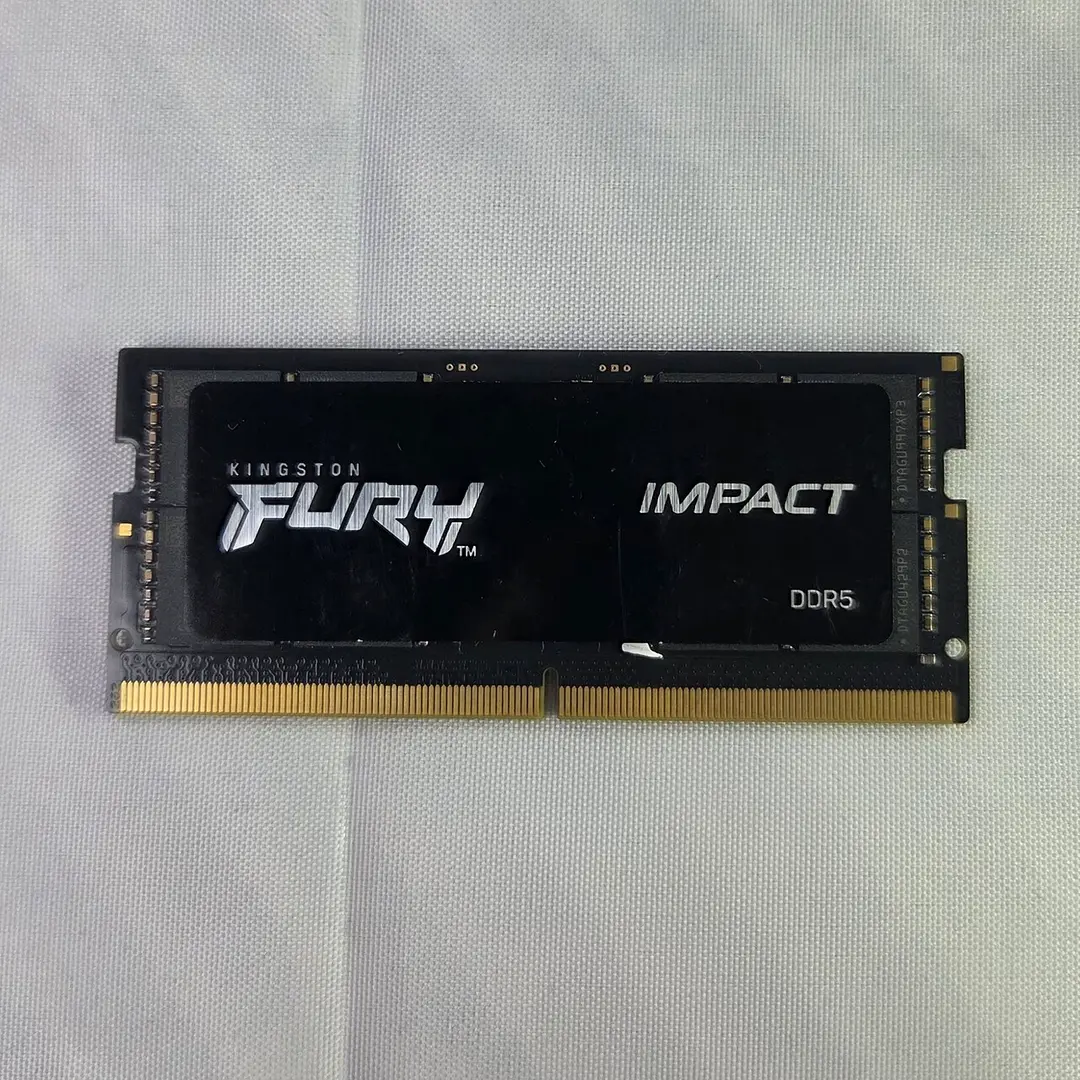
A DDR5 laptop memory module. DDR6 aims to be much faster and much smaller. (Photo: ITEagle Europe / Sebastiaan Broekhoven, CC BY-SA 4.0, via Wikimedia Commons)
How much faster is DDR6?
DDR6 starts at 12.8 GT/s (billion transfers per second) and is expected to go to 14.4 GT/s and beyond. DDR5 tops out at 9.2 GT/s today.
That's a big jump, but not the 2x leap we saw going from DDR4 to DDR5. Still, memory always gets faster over a generation's life, so DDR6's final speeds could end up much higher.
Part of the speed boost comes from a wider data bus: DDR6 moves from 64 to 96 data lines, so more data travels in each cycle.
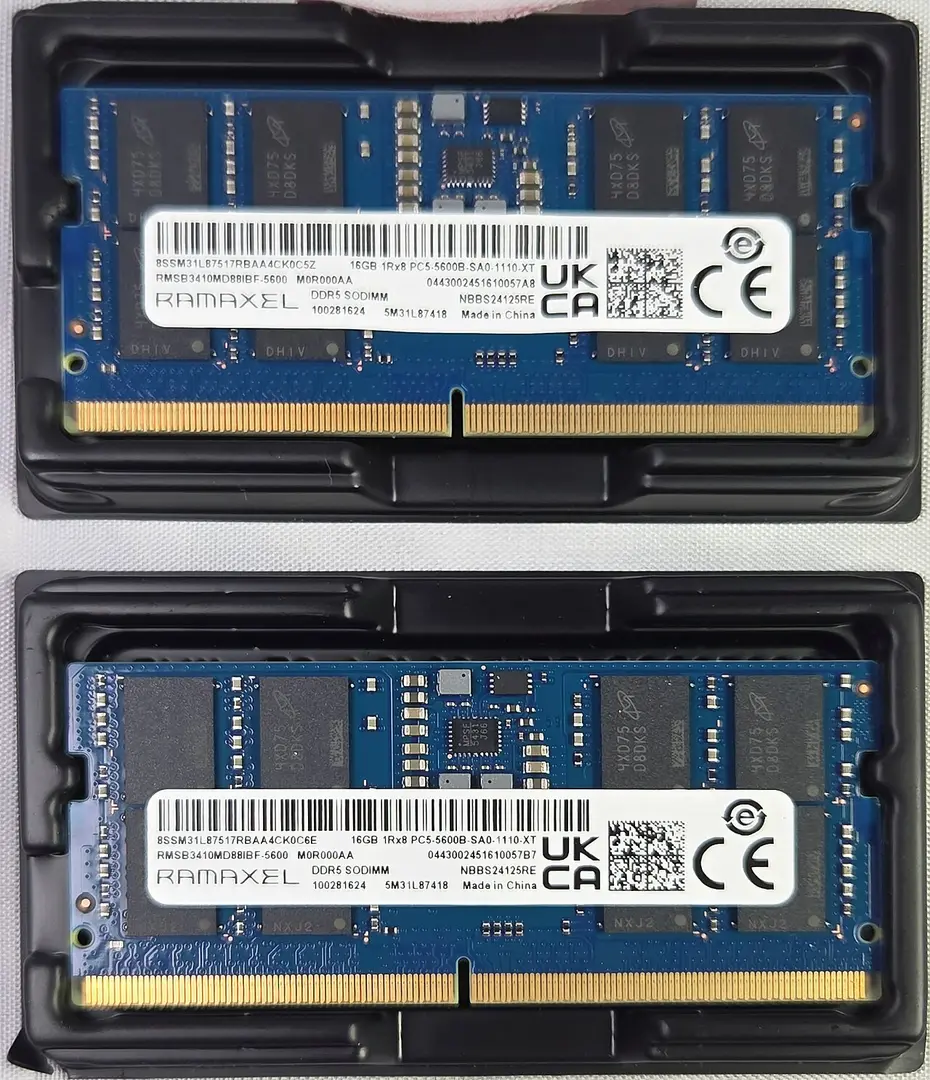
DDR5 memory modules. DDR6 widens the data bus from 64 to 96 lines. (Photo: ITEagle Europe / Sebastiaan Broekhoven, CC BY-SA 4.0, via Wikimedia Commons)
Why is it so small?
DDR6 modules are 74 mm long, almost half the 133 mm of a DDR5 stick. JEDEC says the smaller size is meant to help fit more memory into each system.
DDR6 will also come in several shapes, including RDIMM for servers, UDIMM for desktops and CAMM, the flat, screw-down module that's starting to replace old laptop RAM sticks.
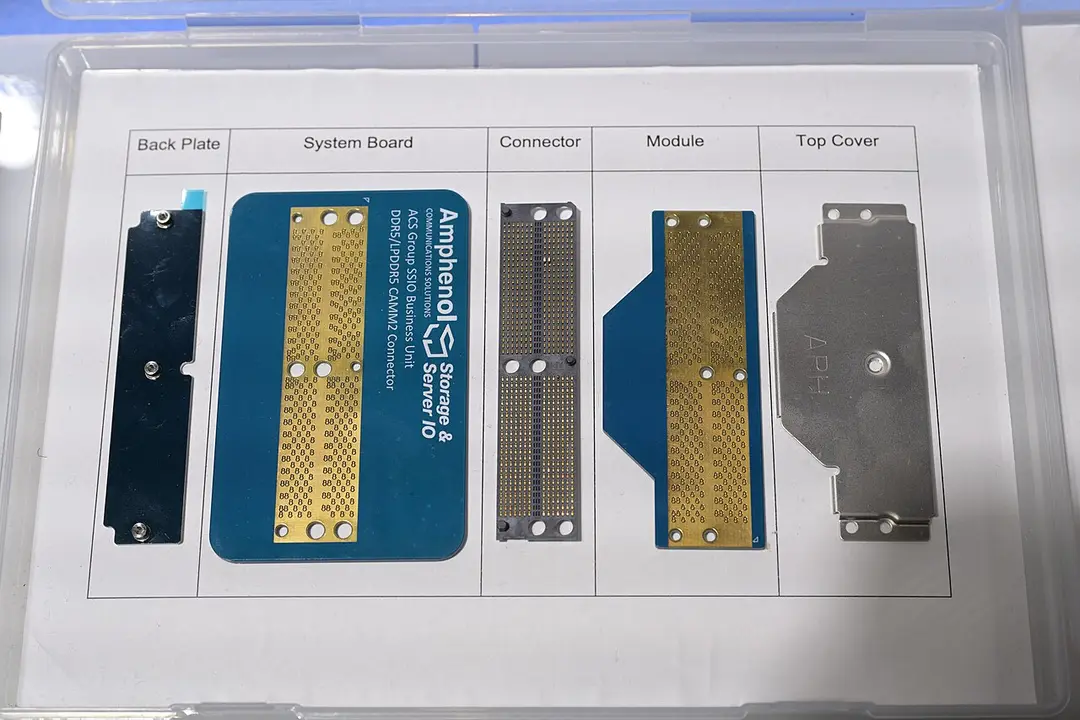
CAMM2 memory modules on display at Computex. DDR6 will support the CAMM form factor too. (Photo: 4300streetcar, CC BY 4.0, via Wikimedia Commons)
More memory, less power
DDR6 supports double the DRAM die density of DDR5, so each chip can hold more. JEDEC also says it improves performance per watt, using a change to how the signals are terminated (VSS-terminated IO) plus new low-power modes for data centers.
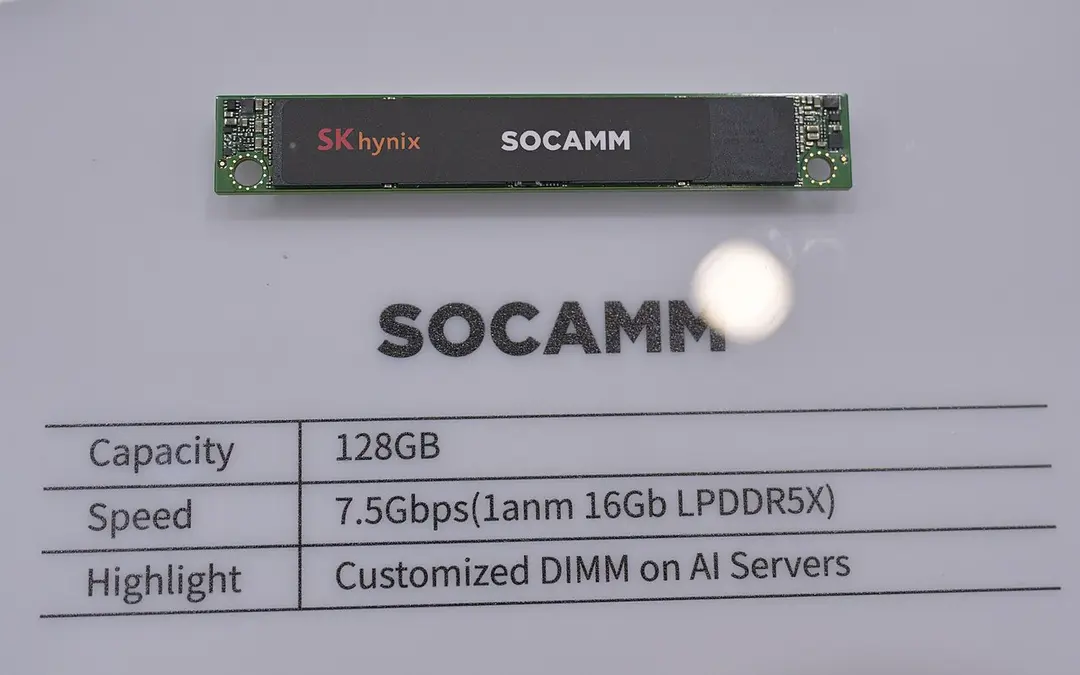
SK Hynix's SOCAMM, a compact memory module for AI servers. AI is driving the push for smaller, denser memory. (Photo: 4300streetcar, CC BY 4.0, via Wikimedia Commons)
The catch: it's built for AI first
JEDEC says plainly that DDR6 is "built for the data center." Its design is tuned for high-capacity modules for general computing and for AI inference and agentic AI, which need lots of memory close to the processor.
That doesn't mean PCs will be left out. But it shows where memory makers are putting their focus.
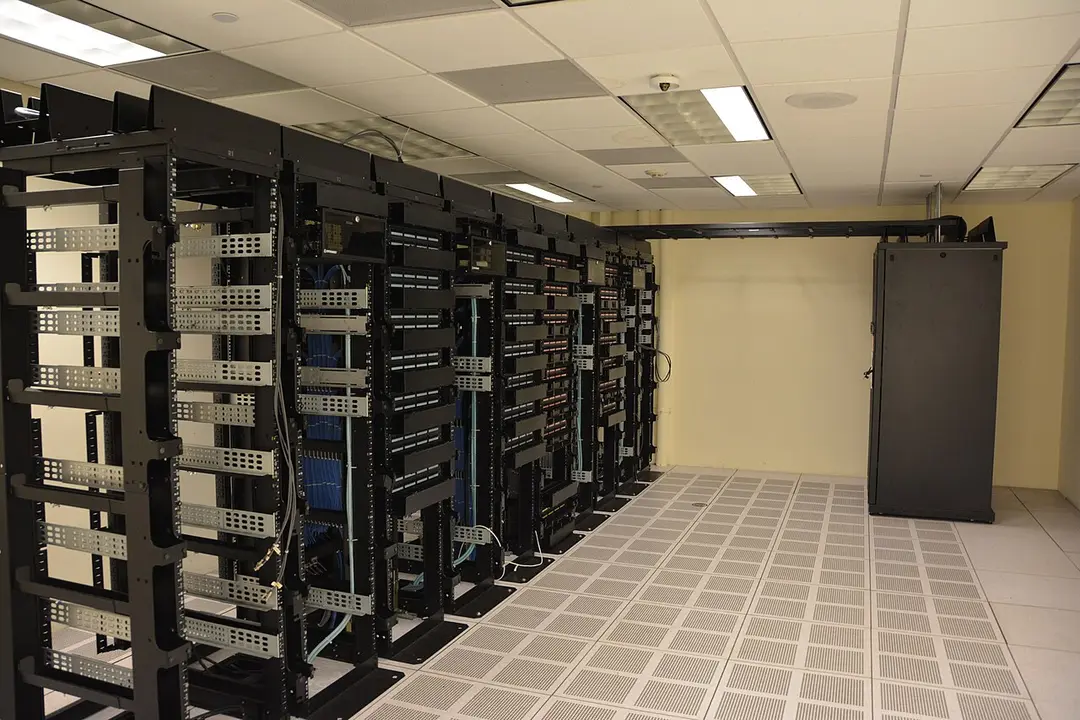
Server racks in a data center. JEDEC says DDR6 is designed for the data center first. (Photo: Carl Lender, CC BY 2.0, via Wikimedia Commons)
When can you buy DDR6?
There's no official date. The release window looks like 2028 to 2029, according to PC Gamer.
Meanwhile, today's memory shortage is expected to last at least through 2027, driven by AI demand. Acer's CEO has said it can't last until 2030, but nobody knows exactly how fast supply will catch up.
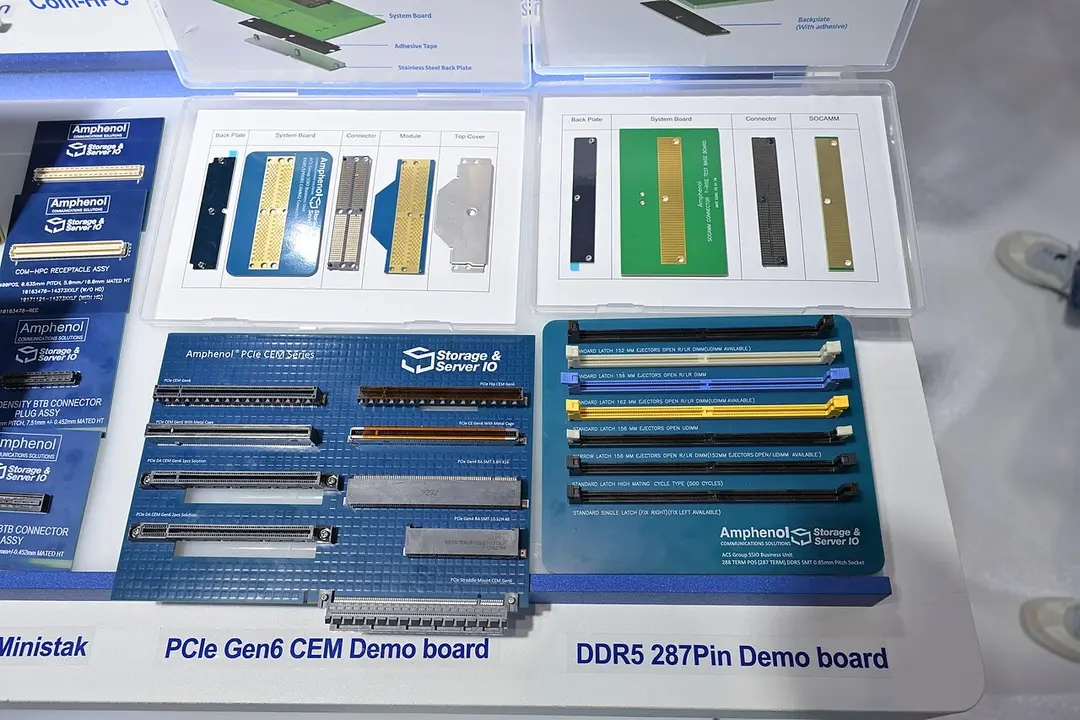
DDR5, PCIe and CAMM connectors at Computex. New memory standards need new connectors and new motherboards. (Photo: 4300streetcar, CC BY 4.0, via Wikimedia Commons)
Should you wait for DDR6?
No. If you need a PC or upgrade now, DDR5 is the standard and will be for years. DDR6 will arrive first in servers, then reach PCs later, and it will need new processors and motherboards. Think of it as the RAM for the computer after your next one.